
Critical Safety Alert: Burst Water Heater Brighton CO
Never step into deep standing water near an electric heater: Water conducts electricity. You could suffer a deadly shock. Turn off the main electrical breaker first from a dry location.
If you smell gas or rotten eggs: Stop right now. Do not touch light switches or click matches. Leave your house right away and call your gas company or 911 from outside. Never try to open gas valves or touch internal wiring yourself.
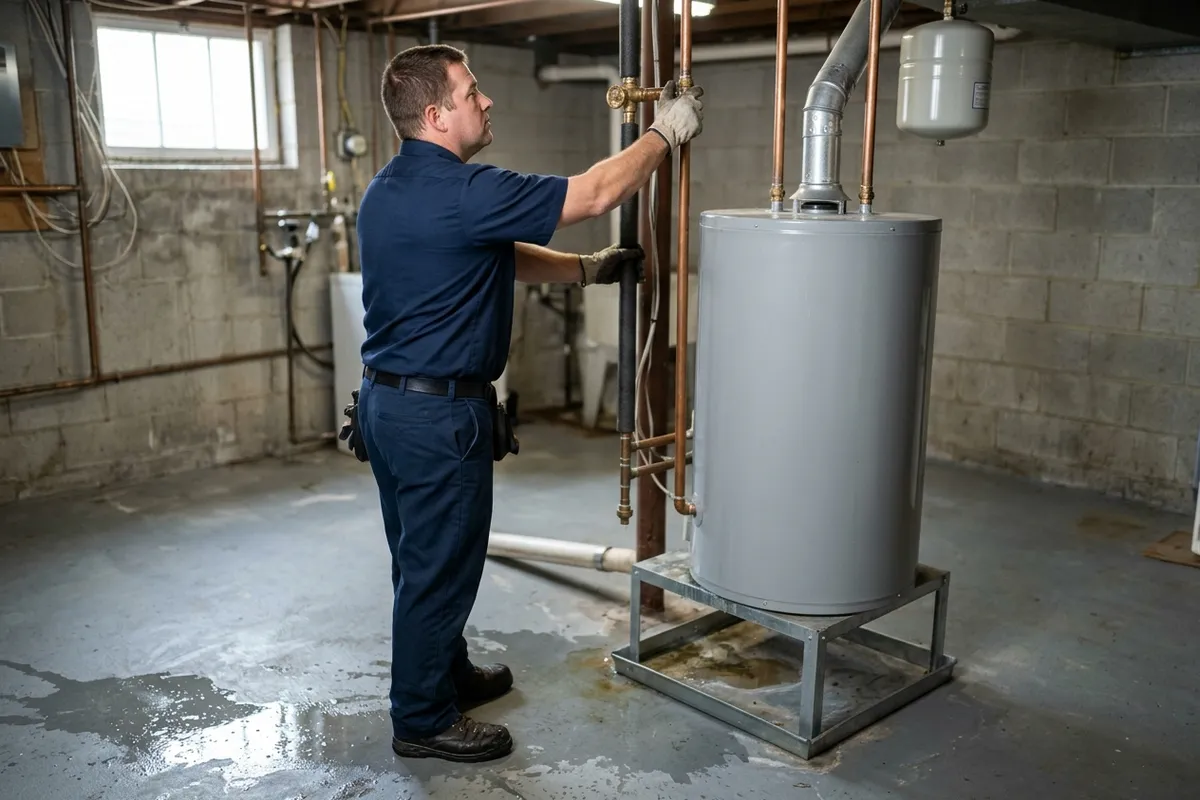
Dealing with a burst water heater brighton co emergency is a true household crisis. When a tank ruptures, it can dump 40 to 50 gallons of scalding water onto your floor in just a few minutes. Worse yet, fresh municipal water keeps feeding the leak under full pressure until you shut it off.
Every second counts during a plumbing flood. The decisions you make in the first ten minutes determine whether you face a quick cleanup or thousands of dollars in water damage. Here is your step-by-step master plumber guide to stopping the flood right now.
1. Step 1: Shut Off the Water (Where the Valve Is)
Your absolute first job is to cut off the water supply. If you do not stop the incoming water, your municipal line will keep pumping gallons into your basement all day.
Look right above the top of your water heater. You will see two pipes entering the tank. One is hot water leaving, and the other is cold water entering. Look for a shutoff valve on the cold water pipe coming down from the ceiling.
You will find one of two kinds of valves:
- Ball Valve (Straight Lever Handle): This is the modern standard. Turn the lever a quarter turn so it sits crosswise across the pipe. When the handle is perpendicular to the pipe, the water is completely shut off.
- Gate Valve (Round Wheel Handle): This looks like a garden hose faucet handle. Turn the round wheel clockwise (to the right) until it stops turning completely. Older gate valves can stick, so turn it firmly but smoothly.
What if the valve above the tank is stuck, leaking, or submerged in water? Do not waste precious minutes fighting it. Walk immediately to your home's main water shutoff valve. In most Brighton homes, the main shutoff is in the basement near the front wall where the water meter is located. Turn the main house valve off to stop all water flow to the building.
Once you shut off the water, call our licensed dispatch team for emergency water heater repair in Brighton, CO. We offer 60-minute emergency response to secure your home.
2. Step 2: Shut Off Power or Gas Safely
Now that fresh water has stopped flowing, you must turn off the energy source. Running an empty or leaking heater can burn out electrical elements or cause dangerous gas overheating.
How you shut off the power depends on whether your home has a gas or electric heater:
For Electric Water Heaters
Find your home electrical breaker panel. Look for the large double-pole breaker labeled "Water Heater." Flip the switch firmly to the "OFF" position.
Remember: never touch the electrical panel if your feet are wet or if you are standing in water. Stand on a dry board, rubber mat, or dry stairs. If the panel is in a wet area, stay back and call your electric utility or an emergency plumber.
For Natural Gas Water Heaters
On the front bottom of your gas water heater, you will see a control box. There is a dial on top of this gas valve with markings for "ON," "PILOT," and "OFF."
Turn this dial clockwise until it points to "OFF." This closes the fuel supply to the burner and puts out the pilot light. If your gas line has an external shutoff valve with a small lever handle, turn it perpendicular to the pipe. Never touch internal gas lines or attempt to take apart gas piping.
3. Step 3: Stop the Damage (Drain, Towels, Move Valuables)
With water and power shut off, your heater still holds up to 50 gallons of water inside. Even with the top valve closed, that water will slowly drain out through the crack or bottom seam onto your floor.
Here is how you control the flood and protect your belongings:
- Attach a Garden Hose to the Drain Spigot: Near the bottom of your heater, find the brass or plastic drain spigot. Screw a standard garden hose onto the threads. Run the other end of the hose to a floor drain, sump pit, or outside to your driveway.
- Open the Drain Valve: Turn the drain valve with a flathead screwdriver or pliers. This channels the remaining 40 gallons safely into the drain instead of across your utility floor.
- Open a Hot Water Faucet Upstairs: Go to a sink on your main floor and turn on the hot water faucet. This breaks the vacuum inside the pipes and allows the tank to drain much faster through the hose.
- Move Boxes and Valuables to Higher Ground: Cardboard boxes and storage bins soak up water like sponges. Move furniture, electronics, and keepsakes off the floor right away.
- Contain the Water Perimeter: Lay old bath towels, blankets, or sandbags around the edge of the puddle. This keeps water from creeping into finished basement carpets or drywall baseboards.
If you are unsure where the water is coming from, our crew provides precise water heater leak detection to locate hidden leaks before mold takes hold.
4. What NOT to Do During a Water Heater Flood
When a plumbing disaster strikes, panic leads to mistakes. Here are four things you should NEVER do when your water heater bursts:
- Do NOT Try to Tape or Glue the Leak: Water heaters operate under 50 to 80 pounds per square inch of municipal water pressure. Flex tape, epoxy glue, and temporary clamps will burst immediately. Never waste time trying to seal a pressurized tank.
- Do NOT Touch Electrical Outlets in Standing Water: Extension cords, power strips, and low basement outlets in contact with water create lethal shock hazards. Leave them alone until the breaker is cut.
- Do NOT Drain Scalding Water Onto Your Lawn or Plants: Freshly heated water can reach 140 degrees. Running boiling water directly onto your lawn or into plastic buckets can melt plastic and scald skin. Let the water cool slightly or route it to a concrete drain.
- Do NOT Wait Until Morning to Call: Water soaks into drywall, wood subfloors, and carpet pads within hours. Mold can start growing in Adams County basements in as little as 24 to 48 hours. Call for immediate dispatch day or night.
5. What the Plumber Does When They Arrive for a Burst Water Heater Brighton CO Call
When our master plumbers pull up to your Brighton home, we take control of the emergency right away. You can breathe a sigh of relief.
Here is the exact procedure we follow upon arrival:
- Emergency Isolation: We confirm that the water, electricity, and gas lines are 100% safe and fully isolated.
- High-Volume Pump Out: If your tank is still holding water or your drain spigot is clogged with calcium scale, we use a commercial pump to empty the tank in minutes.
- Full Diagnostic Inspection: We perform an emergency diagnostic inspection ($150 to $250) to verify whether the inner tank has burst or if an external pipe fitting simply failed.
- Upfront Flat-Rate Quote: We provide a clear, written quote before we start any repair or replacement. You know the exact cost before work begins.
- Safe Tank Removal and Disposal: We disconnect the failed heater, haul it out of your home, and clean up the work area.
Our service trucks are fully stocked with code-compliant parts, brand-new Bradford White tanks, and pressure valves. In most cases, we install a new system on the very same day.
6. Repair or Replace After a Burst: What Are Your Options?
Homeowners often ask: can my water heater be fixed, or do I need a brand-new one? The answer depends entirely on where the water is coming from.
To understand the difference, check our detailed guide on whether your tank is leaking from the top or bottom. Here is the general rule:
- Top Pipe and Valve Leaks: REPAIRABLE ($150 to $450). If the flood came from a loose flex line, a cracked brass nipple, or a failed temperature and pressure relief valve, the tank itself is fine. We can replace the fitting or valve for $150 to $450 and restore hot water safely.
- Bottom Steel Tank Rupture: REPLACEMENT REQUIRED ($1,800 to $3,400). If water is pouring out from under the bottom metal rim, the internal glass lining has cracked and the steel shell has rusted through. Tanks cannot be welded. Same-day tank replacement ranges from $1,800 to $3,400, including delivery, installation, city permits, and haul-away.
For specialty systems or non-standard configurations, call for an upfront flat-rate quote. We always present your choices clearly without high-pressure sales tactics.
7. How to Prevent the Next Water Heater Burst in Brighton
Water heaters in Brighton face harsh local conditions. Our municipal water carries over 15 grains per gallon of mineral hardness from the South Platte River basin. In winter, groundwater enters homes at around 40°F, forcing tanks to expand and contract heavily.
Here is how you prevent another unexpected burst:
- Check Your Thermal Expansion Tank: Brighton and Adams County plumbing codes require a thermal expansion tank on closed water systems. When water heats up, it expands. Without an expansion tank, water pressure spikes past 100 PSI, stressing tank seams until they burst.
- Replace Your Sacrificial Anode Rod Every 2 to 3 Years: The anode rod attracts corrosive minerals away from your steel tank. In Brighton's hard water, factory anode rods dissolve quickly. Replacing the rod adds years of life to your heater.
- Flush Hard Water Sediment Annually: Mineral scale settles like concrete at the bottom of your tank. This traps heat against the bottom steel, creating weak spots that rust through. Regular flushing clears out scale before damage occurs.
- Install a Water Leak Detector with Auto-Shutoff: Inexpensive smart moisture sensors placed by your water heater can sound an alarm and automatically shut off the water valve the instant moisture is detected.
- Replace Tanks Older Than 8 to 10 Years: Traditional storage water heaters in Colorado last an average of 8 to 12 years. If your heater is over ten years old, replacing it before it bursts gives you complete peace of mind.
Frequently Asked Questions
How fast will a burst water heater flood my basement?
A standard water heater holds 40 to 50 gallons of hot water. If the cold water supply valve stays open, municipal water under 50 to 80 PSI will pump hundreds of gallons into your basement every hour. Shutting the valve right away stops the flow.
Can a burst water heater tank be patched or welded?
No. When an internal glass-lined steel tank bursts from rust, it cannot be safely patched, welded, or taped. The tank is under high municipal pressure and any patch will fail. A ruptured tank requires full tank replacement.
Is it dangerous to walk in water near a leaking water heater?
Yes, it can be very dangerous. Water conducts electricity. If you have an electric water heater or nearby floor outlets, stepping into standing water can cause severe electric shock. Shut off the circuit breaker before stepping near puddles.
How much does it cost to replace a burst water heater in Brighton?
Same-day tank replacement in Brighton ranges from $1,800 to $3,400. This includes a new code-compliant tank, safety fittings, haul-away of the burst unit, and labor. Minor valve leak repairs cost $150 to $450.
Does homeowners insurance cover a burst water heater?
Most insurance policies cover water damage caused by a sudden tank burst. However, policies often exclude the cost of the heater itself if it failed from old age. Take clear photos of the water line and damaged items before cleanup.
Water Heater Bursting or Leaking in Brighton, CO?
Do not wait for water damage to spread. Speak directly with our licensed master plumbers. We provide 24/7 emergency service, same-day repairs, and an upfront flat-rate quote before any work starts.
Call 1 (720) 764-0968