
Understanding Anode Rod Replacement in Brighton, CO
Every glass-lined steel water heater depends on electrochemistry to prevent corrosive galvanic attacks. While the interior steel vessel is coated in glass enamel, microscopic fissures and weld seams inevitably expose bare steel to water. The sacrificial anode rod—a long metal rod made of magnesium, aluminum-zinc alloy, or powered titanium—has a more active galvanic potential than steel.
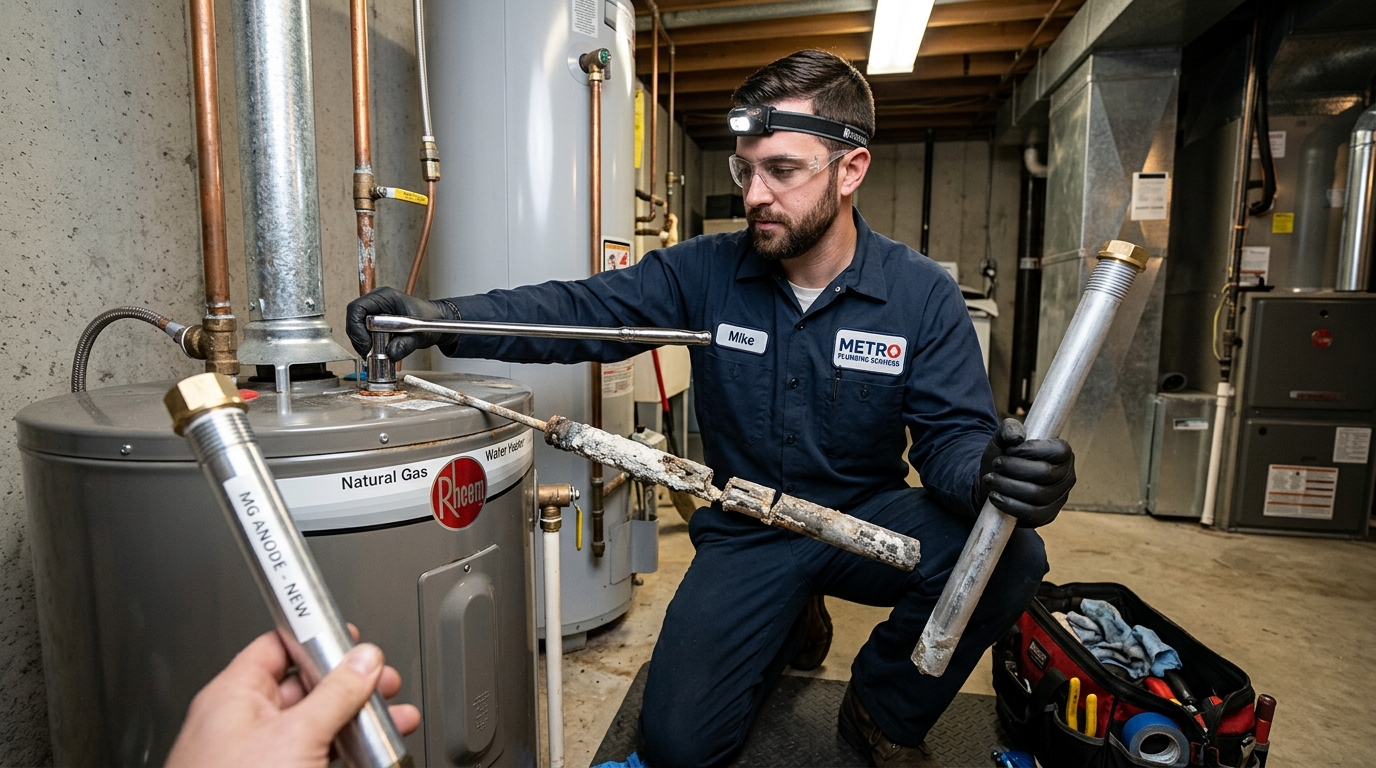
Under natural electrolysis, corrosive minerals attack the sacrificial anode rod rather than the exposed steel tank seams. Over time, the rod sacrifices its mass, dissolving into pitted metallic sponge until only a thin steel core wire remains. Once the anode rod is fully depleted, corrosive minerals attack the water heater's steel tank walls, causing rust perforation within 12 to 24 months. Replacing the rod on schedule preserves the tank indefinitely.
When protecting your steel tank vessel from electrochemical corrosion, our approach to Brighton water heater anode replacement preserves your equipment investment. We measure sacrificial metal depletion, eradicate rotten egg sulfur odors, and install premium magnesium, aluminum-zinc, or powered titanium anodes.
Engineering & Technical Methods for Anode Rod Replacement
Restoring anode rod replacement to peak factory specifications requires strict adherence to manufacturer engineering tolerances and Colorado plumbing codes. Here is the technical protocol our certified technicians follow:
Our anode rod service begins with measuring the remaining rod mass and diameter using digital calipers. Replacement is indicated when more than 6 inches of the internal steel core wire is exposed or rod diameter is reduced by more than 50%. Because factory anode hex plugs are torqued to over 150 foot-pounds at the factory and often seize with rust, standard hand ratchets can spin the entire tank and rupture gas lines.
We use pneumatic or high-torque cordless impact wrenches and heavy-duty 1-1/16-inch six-point sockets to loosen seized hex plugs safely without twisting the water heater. In basements with low ceiling clearance (common in Brighton utility closets), we install flexible segmented anode rods linked with stainless steel couplers. If rotten egg odors are present, we install aluminum-zinc alloy rods or electric powered titanium anodes that emit impressed electrical micro-currents to stop corrosion permanently without producing sulfur gas.
8 Warning Signs You Need Anode Rod Replacement Immediately
Water heating problems rarely occur without early mechanical warnings. If your Brighton home exhibits any of these 8 symptoms related to anode rod replacement, prompt diagnostic evaluation is essential:
-
Rotten Egg or Sulfur Odor from Hot Water Faucets:
Sulfur-reducing bacteria in municipal water reacting with magnesium anode rods to generate smelly hydrogen sulfide (H2S) gas.
-
Rusty, Brown, or Tea-Colored Hot Water:
A depleted anode rod allowing internal steel tank walls to rust, shedding iron oxide into hot water distribution lines.
-
Water Heater Operating for More than 3 Years Without Inspection:
Factory magnesium anode rods in Brighton water typically deplete completely within 3 to 4 years of installation.
-
Small Metallic Particles in Bathtubs and Sinks:
A deteriorating aluminum anode rod flaking aluminum hydroxide gel chunks into household plumbing fixtures.
-
Pinhole Water Seeping Around Top Anode Hex Plug:
Corrosion penetrating threads around the 1-1/16-inch hex head on the top tank jacket.
-
Metallic, Bitter, or Iron Taste in Hot Water:
Elevated concentrations of dissolved metals in the water resulting from galvanic corrosion attacking tank seams.
-
Bubbling or Gurgling Sound Near Top of Water Heater:
Electrolytic chemical reactions generating excessive gas pockets inside the upper dome of the water heater.
-
Home Inspection Report Noting Unknown Anode Status:
Purchasing an established home in Bromley Park or Brighton East Farms where maintenance history is undocumented.
Root Causes of Anode Rod Replacement Issues in Brighton
Anode rod depletion in Brighton, Colorado is accelerated by specific water chemistry conditions:
-
Alluvial Aquifer Mineral Hardness (12 to 18 GPG):
High concentrations of calcium, magnesium, and dissolved sulfates from the South Platte River aquifer dramatically increase electrical conductivity in the water, accelerating galvanic consumption of the anode rod.
-
Sulfate-Reducing Bacterial Reactions:
Harmless sulfate-reducing bacteria thrive in warm water. When these bacteria interact with standard magnesium anode rods, they reduce sulfates into pungent hydrogen sulfide gas, causing rotten egg smells.
-
Water Softener Salt Acceleration:
Many Brighton homeowners install sodium-based water softeners. While softeners prevent scale, the added sodium ions double water conductivity, consuming sacrificial anode rods twice as fast.
-
Low Overhead Basement Ceiling Clearances:
Finished basements in Brighton often have low 7-foot ceilings. Standard 44-inch rigid anode rods cannot be removed without cutting them or draining the entire tank, leading homeowners to neglect replacement.
Safe Homeowner Anode & Odor Diagnostic Checks
Perform these 4 safe checks to evaluate your anode rod condition:
-
Conduct the Hot vs. Cold Water Smell Test:
Turn on a cold water faucet and sniff the water; then turn on a hot water faucet. If the rotten egg smell exists ONLY in hot water, the anode rod reaction is the cause.
-
Check the Water Heater Age on the Manufacturer Label:
Find the serial number on the rating plate. The first 4 digits usually indicate month and year. If the tank is over 3 years old with the original rod, schedule an inspection.
-
Do NOT Attempt Removal with a Hand Wrench:
Factory anode plugs are installed with 150+ ft-lbs of torque. Using a breaker bar without stabilizing the tank can twist the water heater, snapping gas and copper water lines.
-
Examine the Top Hex Plug for Rust or Moisture:
Look at the top of the water heater jacket between the water lines for a 1-1/16-inch hex bolt. Check for rust corrosion or weeping moisture around the threads.
The Professional Anode Rod Replacement Visit: Step-by-Step Protocol
Every anode rod replacement service call conducted by Brighton Water Heater Pros follows a structured, 6-stage engineering and safety workflow:
-
Safe Depressurization & Tank Stabilization:
Technicians shut off cold water, depressurize the tank, and brace the vessel against high rotational torque.
-
High-Torque Impact Extraction of Seized Plug:
We utilize cordless impact wrenches and deep 1-1/16-inch sockets to break seized factory hex threads cleanly without twisting the tank.
-
Internal Tank Inspection with Optical Borescope:
We insert lighted optical cameras through the open bung to examine interior glass lining, steel welds, and sediment depth.
-
Tailored Anode Selection & Flexible Segment Sizing:
We select the ideal rod: magnesium for soft water, aluminum-zinc for sulfur odor elimination, or segmented rods for low ceilings.
-
Thread Preparation with Food-Grade PTFE Sealant:
We clean tank internal threads with wire brushes and apply commercial PTFE tape and pipe sealant to ensure a leak-free seal.
-
Pressurization, Tank Sanitization & Leak Testing:
We refill the tank, perform a hydrogen peroxide sanitization flush if sulfur bacteria were present, bleed air, and test for leaks.
Cost Factors & Pricing for Anode Rod Replacement in Adams County
Anode rod replacement is the most cost-effective preventative maintenance investment for any water heater:
| Service / Component | Estimated Cost Range | Engineering Scope & Details |
|---|---|---|
| Anode Rod Inspection & Condition Assessment | $95 – $150 | Measuring remaining rod diameter, checking tank interior with camera, and checking water chemistry. |
| Standard Solid Magnesium Anode Replacement | $195 – $295 | Extracting old rod, installing factory-spec solid magnesium rod, thread sealing, and leak test. |
| Aluminum-Zinc Alloy Anti-Odor Rod Replacement | $225 – $345 | Specifically engineered to eliminate rotten egg sulfur odors while providing dependable corrosion defense. |
| Flexible Segmented Anode Replacement (Low Ceilings) | $250 – $375 | Four-segment articulated rod designed for basements with tight overhead ceiling clearances. |
| Powered Titanium Anode Installation (Lifetime Protection) | $375 – $550 | Electric impressed-current titanium anode that never depletes and completely prevents sulfur smells. |
| Hydrogen Peroxide Tank Sanitization Flush | $150 – $250 | Chemical sanitization flush to kill sulfur-reducing bacteria inside the tank during anode replacement. |
When Does Anode Rod Replacement Become an Urgent Plumbing Emergency?
Contact our water heater corrosion defense specialists at +1 303-207-3323 immediately if you observe:
- Water is actively weeping from the top anode hex plug threads onto the electrical controls.
- Hot water suddenly turns dark reddish-brown, signaling rapid internal steel tank oxidation.
- Overpowering rotten egg odors make hot showers unbearable throughout the home.
- Your water heater is over 4 years old and you want to prevent sudden tank rupture.
Frequently Asked Questions About Anode Rod Replacement
How often should the anode rod be replaced in Brighton, CO?
In Brighton, sacrificial anode rods should be inspected every 2 years and replaced every 3 to 4 years. High mineral hardness (12 to 18 GPG) and water softeners accelerate anode consumption compared to national averages.
Why does my hot water smell like rotten eggs in Brighton?
Rotten egg smells occur when harmless sulfate-reducing bacteria in municipal water interact with magnesium anode rods, producing hydrogen sulfide gas. Replacing the magnesium rod with an aluminum-zinc alloy rod eliminates the smell.
What is the difference between magnesium, aluminum, and titanium anode rods?
Magnesium provides the strongest corrosion protection for standard water; aluminum-zinc contains 10% zinc to neutralize sulfur smells; powered titanium rods use electrical micro-currents to stop rust permanently without ever dissolving.
Can I replace an anode rod in a basement with a low ceiling?
Yes, we install flexible segmented anode rods consisting of multiple metal sections connected by stainless steel wire. These bend easily to slip into tanks with as little as 12 inches of overhead clearance.
What happens if I never replace the anode rod in my water heater?
Once the sacrificial rod fully dissolves, corrosive minerals attack the water heater's exposed steel tank seams directly. The tank typically develops an unrepairable bottom leak within 1 to 2 years after anode depletion.
Will replacing the anode rod fix an existing water heater leak?
No, replacing the anode rod is preventative maintenance. If the water heater tank is already leaking from internal steel corrosion, the vessel is compromised and must be replaced.
Anode Rod Replacement Service Coverage Across All Brighton Neighborhoods
We provide certified anode rod inspection and replacement across all Brighton neighborhoods and surrounding communities, including Brighton Crossings, Bromley Park, Brighton East Farms, Platte River Ranch, Silver Peaks, Historic Downtown Brighton, Farmlore, Todd Creek, Lochbuie, and Henderson.