
Understanding Sediment Flushing & Descaling in Brighton, CO
When municipal water sourced from the South Platte River alluvial aquifer is heated above 120°F (49°C), dissolved calcium bicarbonate chemically converts into solid calcium carbonate (CaCO3) calcite crystals. These microscopic mineral stones settle by gravity into a dense thermal sludge blanket at the bottom of traditional storage tanks and coat the narrow copper tubes of tankless heat exchangers.
In a 50-gallon water heater in Brighton, up to 30 pounds (13.6 kg) of sediment can accumulate within 24 months. Standard gravity draining through a garden hose cannot remove this cemented mineral crust because cheap factory plastic drain valves have tiny 1/2-inch openings that clog instantly. Our certified technicians perform pressurized power flushes and chemical descaling that break up rock scale, eliminate kettling sounds, and restore factory heat transfer.
When restoring water heaters choked with South Platte mineral scale, our approach to Brighton water heater maintenance service uses professional pulsating hydro-flush technology. We dislodge hard calcium rock without scratching glass linings, quiet down noisy rumbling tanks, and restore lost heating efficiency.
Engineering & Technical Methods for Sediment Flushing & Descaling
Restoring sediment flushing & descaling to peak factory specifications requires strict adherence to manufacturer engineering tolerances and Colorado plumbing codes. Here is the technical protocol our certified technicians follow:
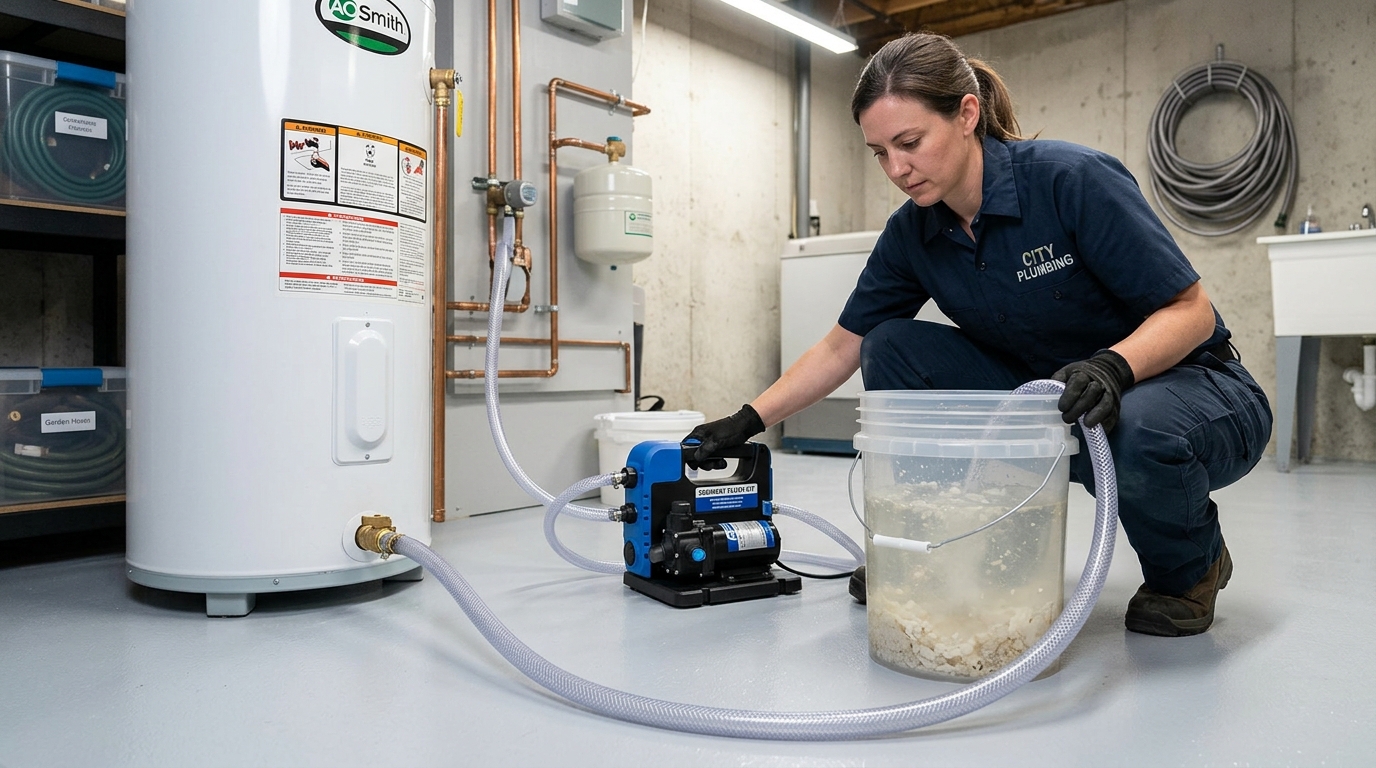
Our professional sediment flushing protocol uses commercial-grade hydro-pulsating flush carts. If the tank is equipped with an inexpensive plastic factory drain cock, we first extract the clogged valve and install a full-port 3/4-inch commercial brass ball valve. We connect high-temperature discharge hoses routed to an approved exterior drainage location or utility sink.
We alternate between high-pressure agitation cycles and rapid vacuum flushes, introducing bursts of pressurized water to break the cemented calcite crust off the bottom dish. For severe scaling, we circulate a safe food-grade sulfamic or citric acid descaling solution that chemically dissolves calcium carbonate into soluble liquid without damaging the interior glass lining. We inspect the clean tank interior using lighted optical borescopes before returning the unit to service.
8 Warning Signs You Need Sediment Flushing & Descaling Immediately
Water heating problems rarely occur without early mechanical warnings. If your Brighton home exhibits any of these 8 symptoms related to sediment flushing & descaling, prompt diagnostic evaluation is essential:
-
Loud Popping, Rumbling, or Kettling Sounds from Tank Base:
Trapped boiling water beneath a dense sediment blanket creating high-pressure steam bubbles that pop violently through mineral rock.
-
Hot Water Running Out After 10 to 15 Minutes:
Massive sediment accumulation occupying up to 30% of internal tank volume, significantly reducing usable hot water capacity.
-
Water Taking Twice as Long to Recover Between Showers:
Sediment blanket acting as an insulating barrier between the gas flame and the water, severely choking heat transfer.
-
Cloudy, Chalky, or Sandy Hot Water from Faucets:
Calcified mineral grit breaking loose from the tank bottom and circulating through home distribution lines into showerheads.
-
Plastic Drain Valve Clogged Solid with Mineral Pebbles:
Attempting to open the drain spigot results in zero water flow or a stubborn trickle blocked by white calcite stones.
-
Lower Outer Tank Jacket Dangerously Hot to Touch:
Gas burner flame overheating the bottom steel dish because the sediment layer prevents water from absorbing thermal energy.
-
Electric Immersion Elements Buzzing or Sizzling Loudly:
Calcium scale encasing 4,500W heating elements, causing localized water boiling and premature element burnout.
-
Sudden Unexplained Increase in Monthly Natural Gas Bills:
Water heater running for hours to heat water through an insulating layer of rock, wasting significant energy.
Root Causes of Sediment Flushing & Descaling Issues in Brighton
Sediment accumulation in Brighton, Colorado is driven by unique geological and water utility factors:
-
South Platte River Basin Mineral Hardness (12 to 18 GPG):
Brighton municipal water drawn from shallow alluvial aquifers registers between 205 and 308 mg/L of calcium carbonate. This severe mineral hardness precipitates rapidly during heating cycles.
-
High Thermostat Settings Accelerating Precipitation:
Setting water heater thermostats above 125°F (52°C) causes exponential increases in calcium precipitation, transforming soluble minerals into rock-like calcite scale.
-
Ineffective Factory Plastic Drain Valves:
Manufacturers install cheap 1/2-inch plastic drain spigots to cut costs. These narrow valves clog immediately during homeowner drain attempts, discouraging regular maintenance.
-
Well Water Mineral Concentrations in Surrounding Areas:
Homes in Todd Creek and rural Adams County operating on private well systems experience high total dissolved solids (TDS) that compound sediment problems.
Safe Homeowner Preventative Maintenance Advice
Review these 4 guidelines before attempting to drain your water heater:
-
Do NOT Force a Seized Plastic Drain Valve:
Inexpensive factory plastic drain valves become brittle and seize from heat. Forcing the handle with pliers can snap the valve stem, causing an uncontrollable flood.
-
Avoid Draining a Heavily Scaled 5+ Year Old Tank via Gravity:
Opening a garden hose on a heavily calcified tank that has never been flushed often dislodges sediment pebbles that jam the valve open permanently.
-
Test Your Home Tap Water Hardness Periodically:
Use simple water hardness test strips to monitor mineral levels. If water hardness exceeds 12 GPG, schedule professional flushing every 12 months.
-
Lower Your Water Heater Thermostat to 120°F (49°C):
Setting your thermostat to exactly 120°F reduces the chemical precipitation rate of calcium carbonate by over 40% compared to 135°F settings.
The Professional Sediment Flushing & Descaling Visit: Step-by-Step Protocol
Every sediment flushing & descaling service call conducted by Brighton Water Heater Pros follows a structured, 6-stage engineering and safety workflow:
-
Initial Thermal & Sound Resonance Inspection:
Technicians tap the lower tank shell to evaluate sediment depth and use infrared thermometers to measure heat transfer efficiency.
-
Full-Port Commercial Brass Valve Upgrade:
We remove clogged plastic drain spigots and install full-port 3/4-inch brass ball valves with garden hose threads.
-
Pressurized Hydro-Pulsating Bottom Scour:
We connect commercial flush pumps that pulse high-velocity water across the concave bottom dish to shatter the calcite blanket.
-
Chemical Descaling Solution Circulation:
For heavily scaled systems, we circulate food-grade descaler to dissolve bonded mineral scale without harming tank glass linings.
-
Internal Borescope Optical Verification:
We inspect the bottom dish and heating elements with lighted optical cameras to confirm total sediment removal.
-
System Refill, Air Bleeding & Thermal Recovery Test:
We refill the tank, purge air pockets, ignite burners, and measure recovery time to confirm quiet, high-efficiency operation.
Cost Factors & Pricing for Sediment Flushing & Descaling in Adams County
Professional sediment flushing pays for itself by preventing premature tank failure and lowering monthly energy bills:
| Service / Component | Estimated Cost Range | Engineering Scope & Details |
|---|---|---|
| Standard Annual Preventative Power Flush | $175 – $275 | High-velocity pressurized water scour, sediment extraction, and safety relief valve inspection. |
| Heavy Chemical Tank Descale & Power Flush | $250 – $395 | Circulating food-grade descaling agents to dissolve rock scale, plus full-port brass valve installation. |
| Full-Port Brass Ball Valve Replacement Only | $150 – $250 | Extracting seized plastic valve, cleaning bung threads, and installing commercial brass ball valve. |
| Tankless Water Heater Descaling Flush | $250 – $400 | Circulating virgin descaling solution through copper heat exchanger coils for 60 minutes. |
| Combined Sediment Flush & Anode Rod Replacement | $350 – $550 | Complete maintenance package: power flush, chemical descale, and new sacrificial anode rod. |
When Does Sediment Flushing & Descaling Become an Urgent Plumbing Emergency?
Call our Brighton water heater maintenance desk at +1 303-207-3323 immediately if hard water mineral buildup triggers:
- Your plastic drain valve snapped or is leaking water uncontrollably onto the floor.
- Loud banging and hammering noises shake the water heater during heating cycles.
- The bottom outer jacket is smoking, discolored, or scorching the floor.
- Hot water faucets are completely blocked by chalky white mineral debris.
Frequently Asked Questions About Sediment Flushing & Descaling
How often should a water heater be flushed in Brighton, CO?
Because Brighton tap water carries 12 to 18 grains per gallon of mineral hardness, traditional storage tanks should be flushed once every 12 months. Homes without water softeners benefit from flushing every 6 months.
Why does my water heater make a loud popping noise when running?
Popping sounds occur when calcium mineral sediment traps water at the bottom of the tank. The trapped water boils into high-pressure steam bubbles that pop loudly as they break through the sediment crust.
Can flushing an old water heater cause it to start leaking?
Flushing does not cause leaks, but in tanks that are 10+ years old, heavy sediment may be temporarily plugging existing rust holes. Removing the sediment exposes the rust perforation. We inspect tank integrity before flushing.
Why won't water drain out of my water heater when I open the valve?
Cheap factory plastic drain valves have tiny openings that clog immediately with mineral pebbles. Our technicians replace these with full-port 3/4-inch brass ball valves that allow thick sediment to flow freely.
What is the difference between gravity draining and power flushing?
Gravity draining simply lets standing water trickle out of a garden hose, leaving heavy cemented mineral scale behind. Power flushing uses pressurized water pulsation to break up and extract heavy rock scale.
Does a water softener eliminate the need to flush my water heater?
A whole-home water softener significantly reduces new calcium scaling, but existing sediment and sodium residues still settle over time. An annual flush remains recommended to maximize tank lifespan.
Sediment Flushing & Descaling Service Coverage Across All Brighton Neighborhoods
We provide professional water heater sediment flushing and descaling across all Brighton neighborhoods and surrounding communities, including Brighton Crossings, Bromley Park, Brighton East Farms, Platte River Ranch, Silver Peaks, Historic Downtown Brighton, Farmlore, Todd Creek, Lochbuie, and Henderson.