
Understanding Pilot Light & Ignition Repair in Brighton, CO
A gas water heater pilot assembly functions as the primary safety gatekeeper for your home's gas combustion system. In traditional standing-pilot systems, a small continuous gas flame burns at the pilot burner tip, enveloping a thermoelectric safety sensor called a thermocouple. The thermocouple consists of two dissimilar metals fused at the tip that generate a tiny direct current electrical potential (between 20 and 30 millivolts) via the Seebeck thermoelectric effect when heated to 1,500°F (815°C). This millivoltage travels down a copper coaxial lead to energize an electromagnetic solenoid inside the gas control valve, keeping the safety fuel valve held open.
Modern energy-efficient gas water heaters utilize electronic intermittent pilot systems or self-powered thermopiles that generate 500 to 750 millivolts. This higher voltage powers digital microprocessor control modules, status LEDs, and electronic temperature sensors. In Brighton, lower atmospheric oxygen density at 5,000 feet, combined with fine alkaline drywall dust and furnace blower circulation in basement utility closets, clogs the precision pilot gas orifice (which has a microscopic aperture diameter under 0.015 inches). When the orifice clogs or soot blankets the sensor tip, millivolt output plummets, triggering an immediate safety fuel lockout.
When a gas pilot flame refuses to ignite or stay lit, our approach to licensed water heater plumbers in Brighton focuses on precision flame sensing. We measure thermocouple millivoltage under load, clear microscopic pilot orifices of carbon soot, and restore safe, dependable ignition.
Engineering & Technical Methods for Pilot Light & Ignition Repair
Restoring pilot light & ignition repair to peak factory specifications requires strict adherence to manufacturer engineering tolerances and Colorado plumbing codes. Here is the technical protocol our certified technicians follow:
Our ignition diagnostic protocol begins with a combustible gas leak sweep using electronic hydrocarbon sniffing detectors around all gas cock valves, unions, and control valve connections. We test the piezoelectric spark igniter: depressing the spark push button creates a high-voltage pulse across the ceramic electrode gap (targeting a crisp 1/8-inch spark directly into the pilot gas stream). If the spark is weak or absent, we inspect the ceramic insulator for hairline cracks that ground the spark to the burner chassis before it reaches gas.
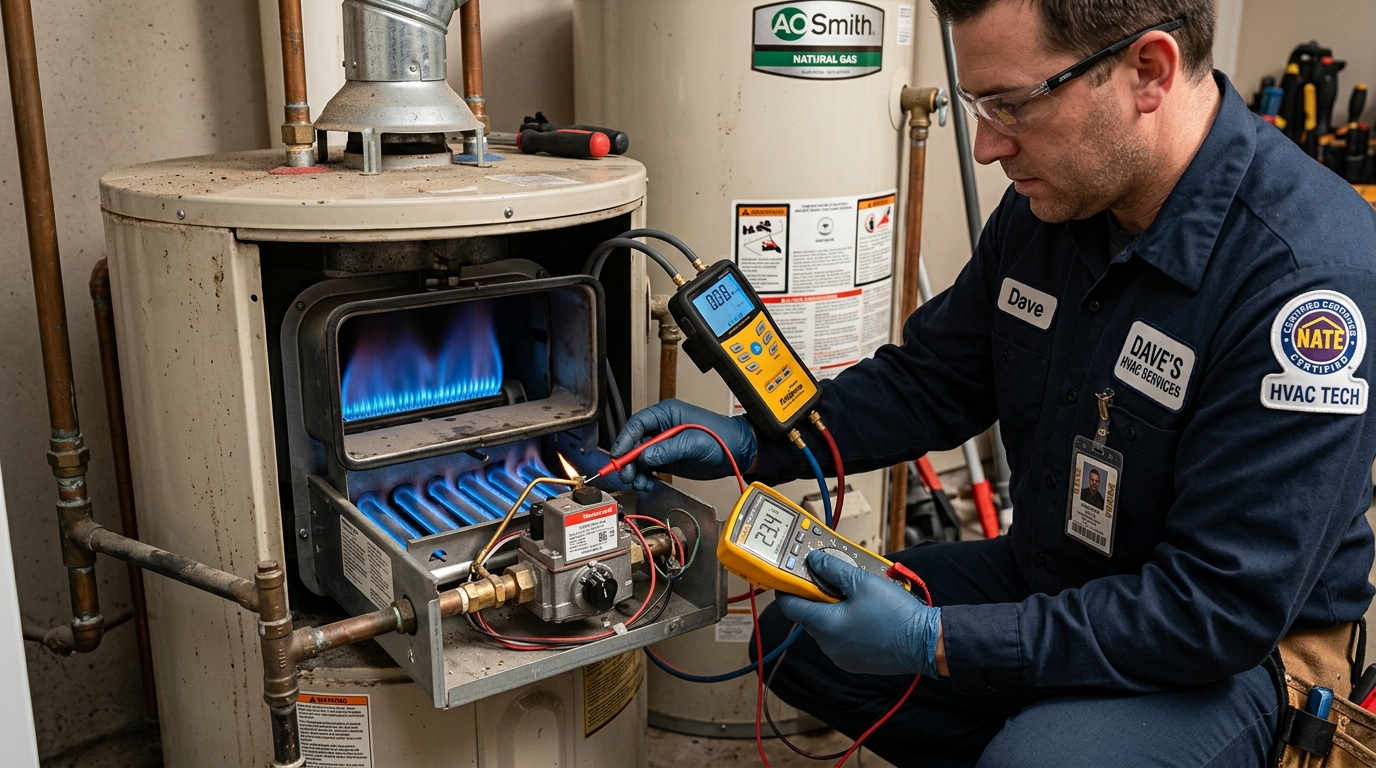
We conduct precise electrical diagnostics on the flame sensor using specialized millivolt test adapters and digital multimeters. We measure open-circuit millivoltage (healthy thermocouples generate 25 to 35 mV; thermopiles generate 650 to 800 mV) and closed-circuit voltage under load (thermocouple minimum 12 mV; thermopile minimum 400 mV). If millivoltage drops below threshold, we remove the entire burner manifold assembly, clean the pilot burner orifice in ultrasonic solvent tanks, wire-brush carbon oxidation from the sensor tip, vacuum the Flammable Vapor Ignition Resistant (FVIR) flame arrestor plate, and verify thermal cutoff switch continuity.
8 Warning Signs You Need Pilot Light & Ignition Repair Immediately
Water heating problems rarely occur without early mechanical warnings. If your Brighton home exhibits any of these 8 symptoms related to pilot light & ignition repair, prompt diagnostic evaluation is essential:
-
Pilot Flame Goes Out the Instant You Release the Knob:
The thermocouple has failed, oxidized, or shifted out of alignment, failing to generate the 25 millivolts needed to hold open the safety magnet.
-
Piezo Spark Igniter Clicks Loudly but Flame Never Catches:
A cracked ceramic spark electrode grounding spark current, or a clogged pilot orifice tube blocking gas flow.
-
Pilot Flame is Weak, Wobbly, Lazy, or Pure Yellow:
Improper air-to-fuel ratio caused by high-altitude oxygen starvation or a dust-clogged pilot burner aeration hole.
-
Pilot Light Blows Out During Front Range Winter Windstorms:
Severe 50+ MPH wind gusts along the Rocky Mountain foothills causing chimney flue downdrafts that overpower the draft hood.
-
Electronic Gas Valve Status Light Blinking Error Codes:
Modern Honeywell or White-Rodgers gas control valves flashing diagnostic LED codes indicating thermopile low voltage or sensor failure.
-
Persistent Rotten Egg Natural Gas Odor Near Burner:
Raw unburned natural gas escaping from a loose flare fitting, damaged pilot tubing, or a leaking gas valve seat.
-
Heavy Black Soot Accumulating on Sight Glass Viewport:
Incomplete combustion creating carbon buildup that blankets ignition electrodes and restricts chamber airflow.
-
Thermal Cutoff (TCO) Fuse on Burner Door Has Tripped:
The single-use thermal fuse has blown due to combustion chamber overheating caused by a clogged FVIR flame arrestor screen.
Root Causes of Pilot Light & Ignition Repair Issues in Brighton
Pilot light and ignition failures in Brighton, Colorado stem from specific environmental and mechanical challenges:
-
High Altitude Atmospheric Oxygen Depletion (4,984 Feet):
Air at nearly 5,000 feet contains roughly 15% less oxygen per cubic foot. Pilot burner air intake ports must remain completely free of lint to maintain the sharp, roaring blue flame required to heat thermocouples.
-
Front Range Chimney Downdrafts from Chinook Winds:
High-velocity wind gusts rolling off the Continental Divide create positive atmospheric pressure down metal B-vents, blowing out delicate pilot flames in basement utility rooms.
-
FVIR Flame Arrestor Dust & Pet Hair Clogging:
Modern water heaters draw combustion air through a ceramic flame arrestor plate beneath the tank. Basement furnace circulation pulls carpet lint and pet hair into this screen, suffocating the pilot of intake air.
-
Fine Dust & Sand Clogging Microscopic Pilot Orifices:
Agricultural breezes across Adams County carry fine prairie dust that accumulates inside the tiny pilot gas orifice tube, restricting gas flow and weakening flame intensity.
Safe Homeowner Pilot Relighting Protocol
Follow this safe, manufacturer-approved procedure if your gas water heater pilot flame has extinguished:
-
Perform an Immediate Gas Sniff Test at Floor Level:
Sniff near the bottom burner door. Natural gas is lighter than air, but mercaptan odorant can pool in low areas. If you smell rotten egg odor, do NOT touch electrical switches, light matches, or attempt to light the pilot. Evacuate immediately.
-
Rotate Gas Control Dial to 'OFF' and Wait 10 Minutes:
Turn the gas thermostat knob to 'OFF'. Wait a full 10 minutes to allow any unburned gas lingering in the combustion chamber to dissipate safely up the chimney flue.
-
Depress the Pilot Knob and Click the Piezo Spark Button:
Rotate the knob to 'PILOT'. Depress and hold the knob down firmly to start pilot gas flow. While holding the knob down, click the piezo spark button once every two seconds while watching through the sight glass.
-
Hold the Pilot Knob Down for a Full 60 Seconds:
Once the blue pilot flame lights, continue holding the knob down for a full 60 seconds. This gives the thermocouple time to heat up to 1,500°F and generate holding voltage. Release slowly and turn the dial to 120°F.
The Professional Pilot Light & Ignition Repair Visit: Step-by-Step Protocol
Every pilot light & ignition repair service call conducted by Brighton Water Heater Pros follows a structured, 6-stage engineering and safety workflow:
-
Combustible Gas Leak Sweep & Pressure Audit:
Technicians test gas supply line fittings with electronic combustible leak detectors and measure gas manifold pressure using digital manometers.
-
Thermocouple & Thermopile Closed-Circuit Voltage Test:
We test open-circuit and closed-circuit millivoltage under flame load using digital multimeters to confirm sensor integrity.
-
Piezo Electric Spark Gap & Insulation Inspection:
We examine the ceramic spark igniter for dielectric breakdown, adjust electrode gap spacing, and clean spark contact points.
-
Burner Manifold Removal & Pilot Orifice Solvent Cleaning:
We pull the burner assembly, disassemble pilot gas tubing, and clean the microscopic brass pilot orifice with solvent to restore full fuel velocity.
-
FVIR Flame Arrestor Vacuum & Gasket Replacement:
We vacuum the lower combustion air intake screen beneath the tank and replace the ceramic burner door viewport gasket to maintain chamber seal.
-
Combustion Efficiency & Flue Draft Safety Test:
We fire the main burner, check flame color and stability, and test draft hood spillage using smoke pencils to verify chimney draw.
Cost Factors & Pricing for Pilot Light & Ignition Repair in Adams County
Pilot light and ignition repair pricing in Brighton depends on the specific electrical, sensor, or gas valve component requiring service:
| Service / Component | Estimated Cost Range | Engineering Scope & Details |
|---|---|---|
| Diagnostic Ignition & Combustion Safety Inspection | $125 – $175 | Combustible gas leak test, millivolt diagnostics, pilot orifice inspection, and flue draft check. |
| Thermocouple Replacement & Pilot Cleaning | $195 – $295 | Installing heavy-duty universal or OEM thermocouple, cleaning pilot orifice, and testing holding voltage. |
| Thermopile Generator Replacement (Electronic Valves) | $250 – $385 | Replacing 750-millivolt thermopile generator for Honeywell or White-Rodgers electronic control systems. |
| Complete Pilot Assembly Replacement | $275 – $425 | Installing complete factory bracket including new pilot burner, orifice, spark igniter electrode, and sensor. |
| Combustion Chamber & FVIR Screen Deep Cleaning | $225 – $350 | Disassembling burner manifold, vacuuming lint from lower flame arrestor, and replacing viewport gaskets. |
| Electronic Gas Control Valve Replacement | $450 – $750 | Installing and calibrating brand-new microprocessor gas control thermostat valve with diagnostic status LED. |
When Does Pilot Light & Ignition Repair Become an Urgent Plumbing Emergency?
Call our certified gas ignition safety technicians at +1 303-207-3323 immediately if you experience:
- Strong rotten egg natural gas odor near the water heater base or spreading into living areas.
- Flames rolling out from beneath the bottom burner access door onto the floor or utility closet framing.
- Household carbon monoxide alarms sounding while the water heater is firing.
- Loud explosive booming noises shaking the utility room when the main burner attempts to ignite.
Frequently Asked Questions About Pilot Light & Ignition Repair
Why does my pilot light go out as soon as I let go of the knob?
The thermocouple is a heat sensor sitting directly in the pilot flame. When heated, it generates 20 to 30 millivolts of electricity to keep an electromagnetic safety gas valve open. If the thermocouple is burned out, coated in soot, or misaligned, it cannot produce holding voltage, causing the safety valve to snap shut the second you release the knob.
What is the difference between a thermocouple and a thermopile?
A thermocouple generates 20 to 30 millivolts to hold open a simple mechanical gas valve on older atmospheric water heaters. A thermopile contains multiple internal thermocouples wired in series, generating 500 to 750 millivolts. This higher voltage is required to power modern electronic gas control valves with diagnostic LED indicator lights.
Why does the wind keep blowing out my water heater pilot light in Brighton?
Brighton experiences severe Front Range windstorms with gusts exceeding 50 MPH. High winds across your roof can create strong downdrafts through metal B-vents and chimneys, pushing down through the water heater draft hood and snuffing out the pilot flame. We install specialized high-wind draft caps and check flue pipe pitch to prevent this.
Is it safe to keep trying to light my pilot light?
If the pilot does not ignite after two or three attempts, stop immediately. Continuously depressing the pilot knob introduces unburned natural gas into the combustion chamber. If gas accumulates and a spark is finally introduced, a dangerous combustion flashback explosion can occur. Wait 10 minutes for gas to clear before trying again.
How does high altitude affect pilot light operation in Brighton?
At Brighton's 4,984-foot elevation, air contains approximately 15% less oxygen per cubic foot than at sea level. This reduced oxygen makes pilot flames more sensitive to dust or lint clogging. Pilot burner aeration holes and orifices must be kept immaculately clean to maintain the tight, hot blue flame cone needed to heat the sensor.
Can I clean my own thermocouple or pilot orifice?
While minor surface carbon on a thermocouple tip can sometimes be wiped clean with fine steel wool, cleaning the microscopic pilot orifice or working inside the sealed FVIR combustion chamber requires specialized gas-fitting tools. Improper reassembly can cause gas leaks or combustion chamber rollouts; professional service is strongly recommended.
Pilot Light & Ignition Repair Service Coverage Across All Brighton Neighborhoods
We provide certified pilot light repair, thermocouple replacement, and ignition safety diagnostics across all Brighton neighborhoods and surrounding communities, including Brighton Crossings, Bromley Park, Brighton East Farms, Platte River Ranch, Silver Peaks, Historic Downtown Brighton, Farmlore, Todd Creek, Lochbuie, and Henderson.