
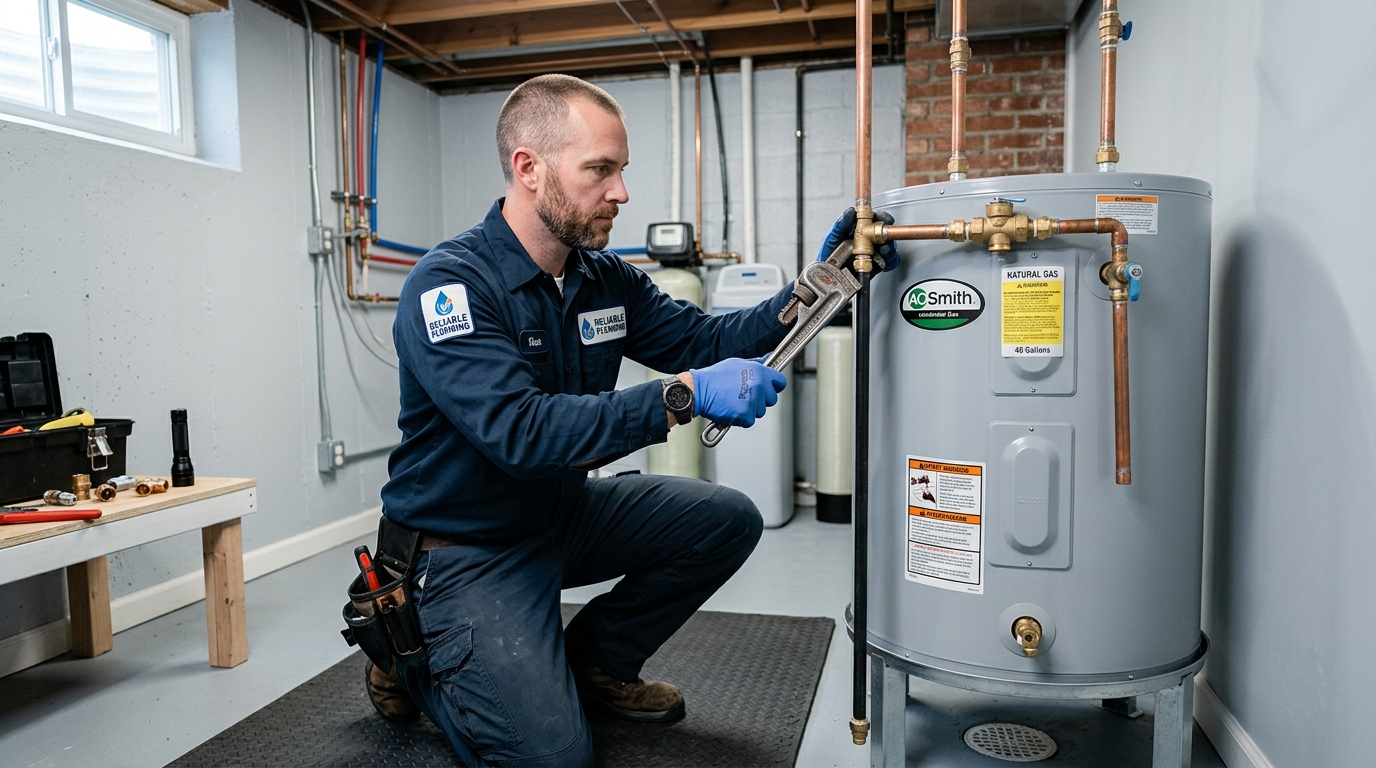
Understanding Traditional Tank Water Heater Repair in Brighton, CO
Traditional storage tank water heaters remain the workhorse of domestic hot water across Brighton, storing between 40 and 50 gallons (151 to 189 liters) of ready hot water. Their operating principle relies on thermal stratification: hot water naturally rises to the top outlet, while cold incoming water is forced to the bottom through an internal plastic dip tube. Heating occurs via atmospheric gas burners firing beneath a concave steel dish or dual 240-volt electric immersion elements.
When mechanical components fail, hot water service drops quickly. In Brighton, hard water minerals and thermal stresses degrade internal dip tubes, corrode dielectric nipples, and burn out electric heating elements. Our technicians evaluate the structural condition of your tank shell first. If the inner steel vessel remains free of rust-through, component repair provides a cost-effective, dependable solution that extends system life by years.
When dealing with traditional storage equipment, our approach to local Brighton water heater experts focuses on honest component diagnostics. If replacing an inexpensive dip tube, gas thermocouple, or heating element will safely restore your hot water, we fix the issue without pushing an unnecessary tank replacement.
Engineering & Technical Methods for Traditional Tank Water Heater Repair
Restoring traditional tank water heater repair to peak factory specifications requires strict adherence to manufacturer engineering tolerances and Colorado plumbing codes. Here is the technical protocol our certified technicians follow:
Our repair protocol begins with a comprehensive physical and electrical safety inspection. For gas storage tanks, we measure thermocouple millivoltage (targeting 25 to 35 mV) to confirm safety magnet operation, inspect pilot flame geometry, and perform a smoke-pencil draft check at the atmospheric flue hood. For electric storage tanks, we check line voltage across upper and lower terminals and measure resistance across both 4,500-watt elements using digital multimeters.
When repairing broken dip tubes, we extract the cracked polypropylene fitting from the cold water inlet port and install a commercial-grade cross-linked PEX dip tube featuring a curved discharge jet that continuously sweeps sediment away from the tank floor. For leaking drain valves, we replace stripped plastic factory spigots with heavy-duty full-port brass ball valves with garden hose threads, facilitating future annual maintenance flushes.
8 Warning Signs You Need Traditional Tank Water Heater Repair Immediately
Water heating problems rarely occur without early mechanical warnings. If your Brighton home exhibits any of these 8 symptoms related to traditional tank water heater repair, prompt diagnostic evaluation is essential:
-
Showers Turning Lukewarm After Just 5 Minutes:
A fractured or disintegrated polypropylene dip tube dumping cold incoming water right at the top hot water outlet port.
-
Loud Popping, Cracking, or Banging from Tank Base:
Dense mineral sediment trapping boiling steam pockets against the bottom steel dish during active heating cycles.
-
Persistent Dripping from Lower Plastic Drain Valve:
Brittle plastic factory drain spigots cracking under repeated thermal expansion cycles and leaking onto the floor.
-
Water Pooling Around Upper Threaded Connections:
Dielectric nipples or hot/cold braided flex connector rubber washers failing and leaking water on top of the tank jacket.
-
Gas Control Status Light Blinking an Error Code:
Modern electronic gas control modules (Honeywell or White-Rodgers) signaling thermal cutoff or thermopile lockouts.
-
Pilot Flame Dying Repeatedly After Releasing Knob:
A weakened or oxidized thermocouple tip failing to generate the required 25 millivolts to keep the gas safety magnet open.
-
Water Temperature Scorching Hot and Scalding Taps:
Thermostat mechanical contacts welding closed, continuously energizing heating elements past safe limits.
-
Rust Streaks Running Down the Outer Tank Enamel:
Slow pinhole weeping around the upper anode rod port or heating element bung corroding the outer steel jacket.
Root Causes of Traditional Tank Water Heater Repair Issues in Brighton
Traditional storage tank water heaters in Brighton suffer specific mechanical component failures caused by local conditions:
-
Thermal Degradation of Factory Plastic Dip Tubes:
Older water heaters installed in Brighton homes used polypropylene dip tubes that become brittle under sustained 120°F water heat, cracking into pieces and destroying hot water stratification.
-
Dense Bottom Sediment Cooking the Steel Tank:
South Platte River water hardness (12 to 18 GPG) settles into a 4-inch calcified sludge blanket, insulating the burner from the water and cooking the bottom steel dish until it cracks.
-
Seized Plastic Drain Valves Breaking on Homeowners:
Inexpensive factory plastic drain valves seize from mineral deposits. When a homeowner attempts to flush the tank, the plastic stem snaps, creating a persistent leak.
-
Negative Pressure Flue Backdrafting in Basements:
Tightly sealed modern homes in Brighton Crossings can experience negative basement pressure when kitchen range hoods run, causing water heater exhaust flues to backdraft.
Safe DIY Checks for Storage Tank Owners
Perform these 4 safe checks before calling our service technicians:
-
Check the Thermostat Temperature Dial:
Verify that the temperature knob is set to 120°F (49°C). Setting the temperature higher accelerates sediment formation and scald risks.
-
Wipe Top Pipe Fittings with a Dry Paper Towel:
Check the cold inlet and hot outlet flex lines on top of the tank with a paper towel to confirm whether moisture is from a threaded fitting or internal tank failure.
-
Inspect the Gas Valve Status Light / Pilot Glass:
Look for a blinking LED indicator light on electronic gas control boxes, or check through the glass viewport to see if the blue flame is lit.
-
Check the Electric Breaker Panel for Tripped Poles:
If you have an electric tank, check your main service panel to ensure the dedicated 240V double-pole 30-amp breaker has not tripped.
The Professional Traditional Tank Water Heater Repair Visit: Step-by-Step Protocol
Every traditional tank water heater repair service call conducted by Brighton Water Heater Pros follows a structured, 6-stage engineering and safety workflow:
-
Hydrostatic Pressure & Safety Assessment:
Technicians measure incoming water line pressure and test the Temperature and Pressure relief valve for proper spring seating.
-
Flue Draft & Gas Combustion Analysis:
We test atmospheric chimney draft using smoke pencils and test gas connections with electronic combustible gas detectors.
-
Dip Tube & Internal Baffle Inspection:
We remove cold water fittings to inspect the dip tube for thermal fractures, crumbling plastic, or sediment blockages.
-
Electrical Resistance & Voltage Diagnostics:
On electric units, we test element resistance (12.8 ohms target) and check thermostat contact continuity under load.
-
Component Replacement with OEM Hardware:
We install factory-certified thermocouples, heating elements, brass drain valves, and PEX dip tubes.
-
Pressurization, Bleeding & Final Operational Audit:
The tank is pressurized, air is purged from lines, combustion draft is confirmed, and water temperature is tested at the fixture.
Cost Factors & Pricing for Traditional Tank Water Heater Repair in Adams County
Repairing a traditional storage water heater is significantly more affordable than premature replacement:
| Service / Component | Estimated Cost Range | Engineering Scope & Details |
|---|---|---|
| Diagnostic Service Inspection | $125 – $195 | Complete electrical, hydrostatic, and combustion safety diagnostic evaluation. |
| Thermocouple / Pilot Assembly Replacement | $200 – $350 | Installing factory OEM thermocouple, cleaning pilot burner orifice, and adjusting draft. |
| Electric Heating Element & Thermostat Repair | $250 – $450 | Replacing upper and lower 4,500W heating elements and dual thermostats with heavy-duty parts. |
| PEX Dip Tube Replacement | $225 – $375 | Extracting cracked plastic dip tube and installing heavy-duty curved PEX dip tube. |
| Full-Port Brass Drain Valve Upgrade | $175 – $300 | Removing leaking plastic drain cock and soldering full-port commercial brass ball valve. |
| Gas Control Thermostatic Valve Replacement | $450 – $750 | Installing and calibrating brand-new electronic or mechanical gas control valve assembly. |
When Does Traditional Tank Water Heater Repair Become an Urgent Plumbing Emergency?
Reach out to our emergency storage tank repair specialists at +1 303-207-3323 if your water heater exhibits:
- Water is actively pooling around the bottom of the water heater tank.
- You smell natural gas or see scorch marks around the bottom burner access door.
- Scalding water and steam are blasting out of the T&P relief valve discharge pipe.
- Water is leaking onto electrical junction boxes or upper thermostat panels.
Frequently Asked Questions About Traditional Tank Water Heater Repair
How do I know if my water heater can be repaired or needs replacement?
If your water heater is under 8 years old, has no rust on the outer jacket seams, and leaks only from replaceable fittings or components, repair is usually the best financial choice. If the inner steel vessel has rusted through, replacement is required.
Why does my hot water run out much faster than it used to?
In gas water heaters, heavy mineral sediment displacing water volume is the most common cause. In electric models, a failed lower heating element leaves only the top 20 gallons of water heated.
What causes the plastic dip tube to break inside the water heater?
Older water heaters used polypropylene dip tubes that degrade and crumble under sustained hot water heat, dumping cold incoming water at the top of the tank right next to the hot outlet port.
How long does a typical tank water heater component repair visit take?
Most standard tank repairs—such as heating element replacement, thermocouple replacement, or dip tube installation—are completed in 60 to 90 minutes on our initial visit.
Can you replace a leaking plastic drain valve with a metal one?
Yes, we routinely remove stripped or leaking plastic factory drain valves and install full-port commercial brass ball valves that provide leak-free service and make annual flushing easier.
Why is my water heater making a loud popping noise when heating?
Popping sounds occur when calcium mineral sediment traps water at the bottom of the tank. The trapped water superheats into steam bubbles that pop loudly as they break through the sediment crust.
Traditional Tank Water Heater Repair Service Coverage Across All Brighton Neighborhoods
We provide same-day traditional tank water heater repair across all Brighton neighborhoods and surrounding communities, including Brighton Crossings, Bromley Park, Brighton East Farms, Platte River Ranch, Silver Peaks, Historic Downtown Brighton, Farmlore, Todd Creek, Lochbuie, and Henderson.