
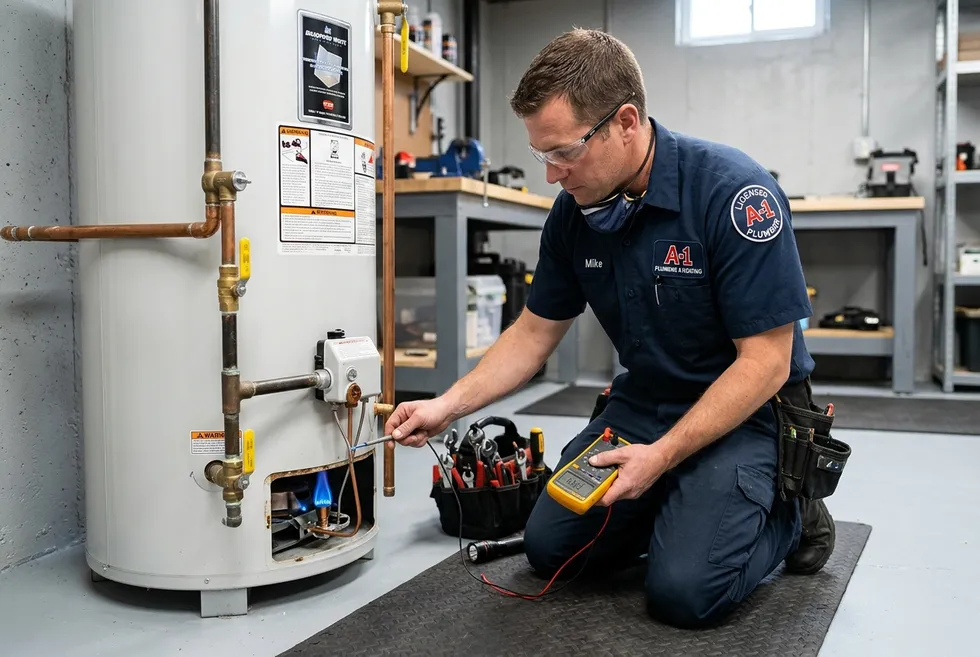
How a Gas Water Heater Pilot Light Works (The Simple Basics)
Gas water heaters need fire to heat your water. Most traditional tanks use a tiny, steady flame called a pilot light. Think of the pilot light as a match that burns day and night inside your heater. It waits quietly until you need hot water.
When you take a shower or run the washing machine, cold water enters the tank. The thermostat feels the water cooling down. It opens a valve to send gas to the main burner at the bottom of the tank. The pilot flame touches that gas and lights the big burner with a gentle whoosh. The burner heats the water up to 120 degrees. Once the water is hot, the main burner shuts off. But the tiny pilot flame stays burning.
If that tiny flame blows out, you lose all hot water. If you want to know why your water heater has no hot water, an extinguished flame is one of the most common reasons in Brighton. More importantly, unburned gas could leak into your room if the valve stayed open. That is why modern water heaters have clever safety switches. If the flame goes out, the safety switch shuts the gas valve tight within 30 seconds.
Standing Pilot vs. Electronic Spark Ignition
Older heaters use a standing pilot. That means the flame burns all the time. Newer energy-saving models use an electronic spark. A small spark lights the pilot only when the tank calls for heat. If you see a small blinking green light on the front box of your heater, you have a modern electronic system. Both systems use similar safety sensors to keep your home safe.
Reason 1: A Dirty or Bent Thermocouple (The Most Common Culprit)
Nine out of ten times, a pilot light that goes out right after you let go of the knob has a dirty thermocouple. A thermocouple looks like a thin copper wire with a small metal pencil tip. It sits right next to the pilot flame.
The thermocouple is a heat sensor. When the pilot flame touches the metal tip, it gets very hot. This heat creates a tiny trickle of electricity called millivolts. It is only about 25 to 30 millivolts, but that tiny electrical pulse powers a small magnet inside the gas control box. The magnet holds the gas valve open.
Here is what goes wrong over time:
- Soot and Carbon Buildup: Burning gas leaves a thin layer of black soot or white mineral dust on the metal tip. This crust acts like a blanket. It blocks the heat from touching the sensor. The thermocouple stays cold, so it stops sending the electric signal. The magnet drops, and the gas valve snaps shut.
- The Sensor Is Bent Away: Sometimes the metal bracket gets bumped during cleaning or tank service. If the tip is even a quarter of an inch away from the flame, it will not get hot enough to hold the valve open.
- The Sensor Is Burned Out: Thermocouples live inside an active flame. After 5 to 7 years of constant heat, the internal metals wear out. Once broken, the sensor will never produce voltage again.
Can you clean it? A plumber can gently scrub the metal tip with a soft abrasive pad or fine emery cloth to wipe away black carbon. If cleaning does not work, replacing the part is fast and affordable. Schedule professional pilot light and ignition repair to have a licensed technician test your sensor voltage safely.
Reason 2: Strong Colorado Front Range Winds and Chimney Backdrafts
Does your pilot light go out only on cold, stormy days? If so, the weather outside may be the real cause. Brighton sits on the open plains of Adams County, just east of the Rocky Mountain foothills. Heavy wind gusts sweeping across the prairie often hit 40 to 60 miles per hour.
Standard gas water heaters have a metal exhaust pipe that runs from the top of the tank up through your roof. Hot fumes rise naturally up this chimney pipe and exit into the sky. But strong Colorado winds can create high air pressure over your roof cap.
When the wind blows hard enough, it pushes cold air backwards down the chimney pipe. Plumbers call this a backdraft. The sudden gust of outdoor air travels down into the burner chamber. It snuffs out the pilot flame just like blowing out a candle on a birthday cake.
The Simple Smoke Test for Chimney Draft
You can check if your water heater chimney is drafting properly on a windy day:
- Turn on hot water upstairs so the main water heater burner fires up.
- Wait two minutes for the metal vent pipe above the tank to get warm.
- Carefully light a match or stick of incense. Hold the smoke about two inches from the open rim of the draft hood (the bell-shaped metal cone above the tank).
- If the vent is working, the smoke will get pulled quickly up into the chimney pipe.
- If the smoke blows back into your face or spills into the room, your chimney has a downdraft or a blockage. Turn off the heater right away and call a technician.
In neighborhoods like Brighton Crossings and Silver Peaks, adding an approved high-wind vent cap on your roof helps block wind gusts and keeps your flame burning steady.
Reason 3: High Elevation and Clogged Air Intake Screens
Brighton sits at an elevation of 4,984 feet above sea level. Up here, air is thinner than at sea level. Thinner air holds about 17 percent less oxygen. Fire needs oxygen to burn cleanly. If your water heater cannot pull in enough fresh air, the flame will choke and die.
Water heaters built after 2003 have safety screens at the bottom of the tank. This metal screen or ceramic plate stops accidental fires in your home. Fresh air must pass through this screen to reach the burner flame.
In most homes, water heaters sit in basements, crawlspaces, or utility rooms next to laundry dryers. Over months and years, floating dust, dog hair, cat fur, and dryer lint get sucked against the bottom screen.
As the screen clogs with fuzz:
- The Flame Starves for Air: The pilot flame changes from a crisp, sharp blue cone into a lazy, floppy yellow flame.
- Soot Multiplies Quickly: A yellow flame does not burn cleanly. It leaves heavy black soot all over the burner assembly and thermocouple tip.
- The Flame Drifts Away: Starved for air, the flame lifts up off the burner tube and flutters. It fails to touch the sensor, and the safety valve shuts down the unit.
Keeping your utility room floor clean makes a big difference. Never store cardboard boxes, laundry baskets, or chemical bottles right against your water heater. If your burner needs deep cleaning, our certified plumbers inspect and tune up burners during complete gas water heater checkups.
Reason 4: Reading the Blinking Light on Modern Gas Valves
Do you have a newer water heater from Bradford White, Rheem, or A.O. Smith? If so, look at the front of the tank. You will see a gray or black plastic box with a clear knob. Near the bottom of this box is a small round light that blinks.
This box is an electronic gas control valve. It has a tiny computer inside. It constantly tests the flame, water temperature, and electrical sensors. When something goes wrong, the light blinks in patterns to tell you what happened. Plumbers call these "blink codes."
| Light Pattern | What It Means | What You Should Do |
|---|---|---|
| One steady blink every 3 seconds | Normal operation. The pilot is lit, and the tank is on standby. | Everything is working fine. No action needed. |
| Rapid continuous blinking | Main burner is actively firing and heating water. | Normal heating cycle. You will have hot water soon. |
| No light at all (completely dark) | The pilot flame is out, or the sensor has zero voltage. | The pilot needs to be safely lit again. Follow the tank label steps. |
| Two blinks, then a pause | Low thermopile voltage. The flame is weak, or the sensor is worn. | Clean the sensor tip or replace the thermopile assembly. |
| Four blinks, then a pause | High temperature limit tripped. Water got too hot. | Turn off the gas. Call a plumber to test the thermostat sensor. |
| Five blinks, then a pause | Temperature sensor error inside the tank. | The electronic sensor probe has failed. The valve needs service. |
| Seven blinks, then a pause | Internal gas control valve failure. | The electronic gas valve must be replaced by a licensed technician. |
If your light blinks an error code, do not keep pressing the reset button over and over. The system is protecting your home from overheating or gas leaks. If you have an on-demand unit showing digital numbers instead of blink patterns, browse our guide to tankless error codes for brand-specific troubleshooting steps. Schedule an inspection with our team for traditional tank repair to diagnose the code accurately.
How to Safely Relight Your Water Heater Pilot Light (Step-by-Step)
Before touching any knobs, stop and take a deep breath through your nose. Do you smell gas? Gas companies add an odor that smells like rotten eggs or boiled cabbage. If you smell gas, do NOT light a match or press any buttons. Leave the house immediately and call your gas utility or our 24/7 emergency service from outside.
If the air smells completely clean, you can try relighting the pilot by following these simple steps:
- Find the Instruction Label: Look at the side of your heater tank. Every manufacturer prints exact lighting steps right on the metal jacket. Always follow those specific steps.
- Turn the Knob to OFF: Turn the gas control knob clockwise to the "OFF" position. Wait at least 5 to 10 full minutes. This gives any trapped gas inside the burner chamber time to clear out safely.
- Locate the Sight Glass: Look at the bottom metal door of the heater. You will see a small glass viewing window. Shine a flashlight through the glass to spot the pilot burner tip.
- Turn the Knob to PILOT: Turn the gas knob to the "PILOT" setting. Press the knob down firmly with your thumb. Pushing down starts a small stream of gas to the pilot tip only.
- Click the Igniter Button: While holding the gas knob down, press the black or red igniter button (piezo clicker) repeatedly. Every click sends an electric spark to the burner. Watch through the window until you see a small blue flame appear.
- Hold the Knob for 60 Seconds: Once the flame lights, keep holding the knob down for a full minute! Do not let go early. The thermocouple needs a minute of solid heat to generate enough electricity to hold the valve open.
- Release the Knob Slowly: After 60 seconds, gently take your thumb off the knob. Does the flame stay lit? If yes, turn the dial to "ON" or your preferred hot setting (around 120 degrees). You will hear the main burner roar to life.
What if the flame goes out the very second you release the knob? That means the safety sensor is not sending voltage, or the valve magnet is stuck. Stop here. Do not try ten times in a row. Call a licensed plumber to inspect the burner parts safely.
When NOT to Relight Your Pilot (Critical Safety Rules for Homeowners)
Natural gas is a clean, safe heating fuel when appliances run properly. But gas requires respect. There are times when attempting to relight a water heater is dangerous:
- You Smell Rotten Eggs: Mercaptan is a safety chemical added to natural gas so humans can smell leaks. If you notice a sulfur or rotten egg smell near the tank, leave the room right away. Do not turn on light switches. Do not use flashlights with loose batteries. Call our emergency water heater repair team or Xcel Energy immediately from outdoors.
- You Hear a Hissing Sound: A loud hissing noise near gas pipe fittings means gas is escaping under pressure. Shut off the manual yellow gas valve on the incoming pipe if you can do so safely, and exit the building.
- Heavy Black Soot Around the Vent: If you see black smudge marks on the draft hood, walls, or outer tank jacket, the burner is producing toxic carbon monoxide gas. A blocked chimney or crushed pipe requires professional inspection before the heater can run again.
- The Pilot Goes Out Multiple Times a Week: If you have to relight your pilot every couple of days in Bromley Park or Historic Downtown Brighton, stop relighting it. The unit has a failing part that will not heal on its own. Constant relighting risks gas buildup inside the chamber.
Repair vs. Replace: What Makes the Most Sense for Your Tank?
When your pilot light refuses to stay lit, should you repair the burner parts or buy a brand-new water heater? Plumbers use a simple guideline based on your tank's age:
| What Is Broken? | Tank Age | Recommended Action | Why This Choice Is Best |
|---|---|---|---|
| Dirty or soot-covered thermocouple | Any age | Clean & Service | A simple cleaning takes under an hour and restores the flame immediately. |
| Worn-out thermocouple or spark wire | Under 8 years | Replace Parts | New ignition parts are inexpensive and add years of dependable hot water. |
| Failed electronic gas control valve | Under 6 years | Replace Valve | If the tank body is clean and under warranty, a new valve is worth the investment. |
| Failed gas valve on aging tank | Over 10 years | Replace Tank | Old tanks in Brighton face hard water rust. Replacing the valve on a 10-year-old tank often wastes money before the tank leaks. |
| Rusted burner chamber with leaks | Over 8 years | Replace Tank | Rust inside the burner chamber means the steel floor is deteriorating. A new unit avoids water damage. |
If your water heater is approaching 10 to 12 years of age, upgrading to a modern energy-efficient model makes good financial sense. Learn more about our professional tank installation options and high-efficiency units that lower your monthly gas bills.
Frequently Asked Questions
Why does my water heater pilot flame look yellow instead of blue?
A healthy pilot flame should be a crisp, steady blue with a tiny yellow tip. If your flame is entirely yellow or orange, the burner is starved for fresh air or choked with dust and soot. A yellow flame burns cold and dirty, which stops the safety sensor from working properly. A technician can clean the burner orifice and air intake to restore a clean blue flame.
Is it dangerous if my water heater pilot light goes out?
No, in modern water heaters it is not dangerous when the pilot goes out. The safety thermocouple cools down in seconds and automatically shuts off the gas flow to prevent leaks. However, if you smell a rotten egg odor around the heater, the safety valve may be stuck or leaking, which is an emergency. In that case, leave your home and call for emergency help.
Can I replace a water heater thermocouple myself?
While hardware stores sell universal thermocouples, working on gas appliances requires extreme care. Replacing the part requires opening the sealed burner chamber, disconnecting delicate gas tubes, and reinstalling the burner gasket properly. In Adams County, having a licensed master plumber do the repair guarantees the gas lines are tested for leaks and the vent drafts safely.
Why does my pilot light go out only when the main burner turns on?
When the big burner turns on, it demands a sudden rush of gas and oxygen. If your gas supply line has low pressure, or if the bottom air screen is clogged with lint, the main burner can pull air and fuel away from the pilot flame. The pilot flame lifts away from the thermocouple, and the safety switch shuts the whole system down.